Blog
Best Types of Roofs For Commercial Roofs in Southern California
October 26, 2021
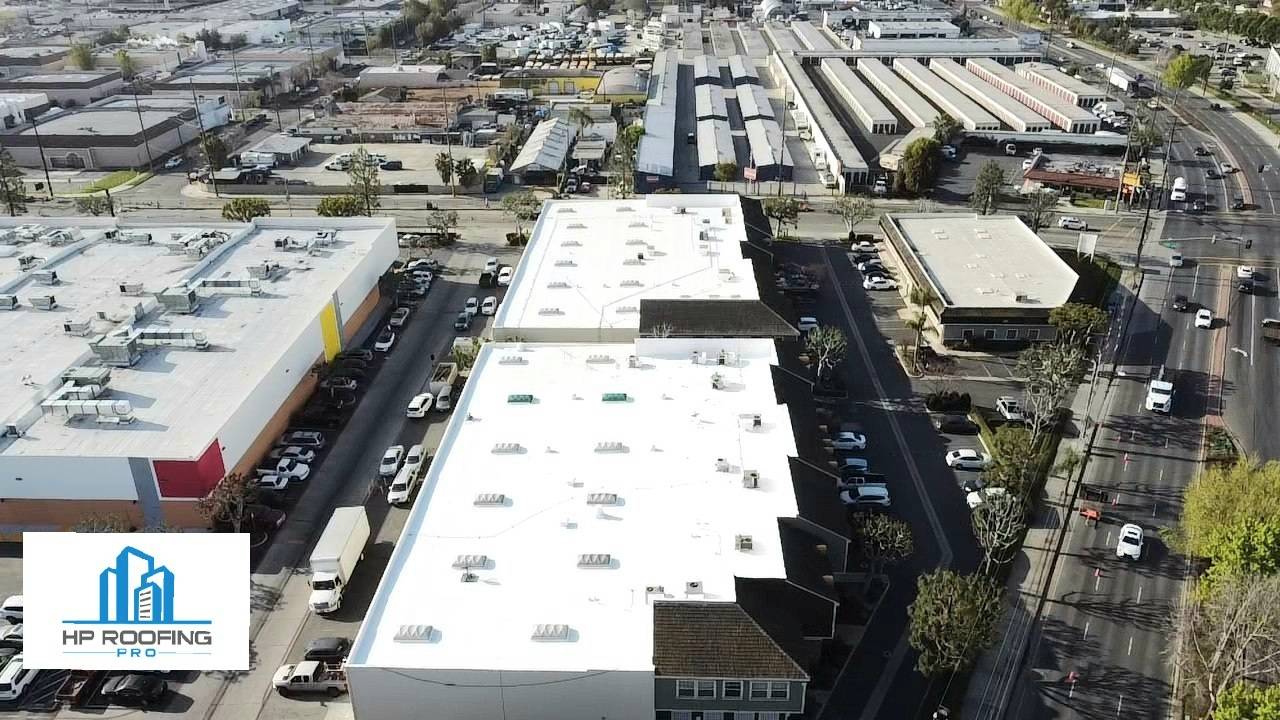
There are different types of roofs for commercial buildings. Each is built according to the budget of the owner and the needs of the building. The kind of roof you choose will determine its integrity over time.
When shopping for a new roof, you need to consider the overall health of your commercial property. Also, consider other factors like typical weather and the surrounding environment. They all play an integral role in the longevity of the roof.
You may be asking, “How do I choose the best roof for my Los Angeles business from the many options available?”
Continue reading to know the most common roof types for commercial buildings. You will also learn the environment they are best suited for and the pros and cons of each.
Metal Roofing
Metal roofing stands out as a premier option among commercial roofing materials, primarily due to its longevity, with service lives ranging from 40 to 60 years. Its popularity is also anchored in the diversity of materials and advanced functionalities it offers.
Key variants in the metal roofing sector include corrugated galvanized steel, known for its durability and cost-effectiveness; copper, which provides an aesthetically pleasing appearance and exceptional longevity; aluminum, favored for its lightweight nature and corrosion resistance; and stainless steel, renowned for its strength and minimal maintenance requirements. Additionally, modern metal roofing systems often incorporate specialized features like integrated snow removal systems or solar panels, enhancing their utility and sustainability.
Metal roofs are lauded for their sustainability credentials, chiefly due to their high recyclability and energy-efficient properties, contributing to reduced building cooling costs. They also boast a superior fire resistance rating, enhancing building safety.
To counteract the inherent vulnerability of metal to corrosion, these roofing systems are treated with protective coatings. These layers serve multiple purposes, including mitigating damage from environmental stressors such as moisture, atmospheric pollution, and UV radiation. This treatment not only prolongs the roof’s lifespan but also maintains its aesthetic appeal over time.
Given these attributes, metal roofing is an increasingly favored choice in commercial construction, offering a blend of durability, aesthetic versatility, and environmental benefits.
Flat Roofs
Flat roofing systems have emerged as a hallmark of modern commercial architecture since the 1920s, symbolizing the industrial and commercial evolution of urban landscapes. Their architectural simplicity and functionality make them an economically attractive option for business owners and building managers.
From a cost-efficiency standpoint, flat roofs require less material per square foot than their steep-slope or pitched counterparts, leading to lower material costs. Additionally, the streamlined installation process associated with flat roofs translates into reduced labor costs and expedited project timelines, offering tangible financial benefits to businesses.
The market offers a diverse range of flat roofing materials, available in various colors and compositions. A prevalent choice among building owners is white roofing, owing to its high solar reflectance. This feature plays a pivotal role in reducing heat absorption, thereby lowering cooling demands and energy expenses.
Despite their advantages, flat roofs can present challenges in water drainage. Poor drainage can lead to water accumulation and subsequent structural issues. To mitigate these risks, engaging with seasoned commercial roofing contractors, particularly those with a track record of successful installations in regions with specific weather patterns, like Los Angeles, is crucial. Experienced professionals ensure proper installation and maintenance, which is critical for optimizing the lifespan and performance of a flat roofing system.
Green Roofing
Green roofs have become one of the most versatile and sustainable roofing options available in the commercial sector. Their adoption has surged in recent years, reflecting a growing commitment among businesses to environmentally responsible practices.
One of the primary advantages of green roofs is their capacity to shield buildings from environmental elements, thereby enhancing the building’s thermal performance. This natural insulation property significantly improves energy efficiency, reducing heating and cooling costs. Furthermore, green roofs manage rainwater runoff, mitigate the impact of heavy downpours, and contribute to urban stormwater management.
Alternatively, incorporating an innovative cool-roof coating system can further augment these environmental benefits. While a seamless coating system is not a green roof in the traditional sense, its contribution to environmental sustainability is noteworthy. The system is designed to reflect more sunlight and absorb less heat than a standard roof, thus reducing energy consumption and urban heat islands. A cool-roof coating, though not green in color, is ‘green’ in its ecological impact, making it a complementary solution to green roofing.
While the initial installation cost of green roofs, especially when integrated with advanced engineered coating systems, may be higher than conventional roofing options, the long-term benefits often outweigh the initial investment. These benefits extend beyond mere cost savings, encompassing enhanced building performance, reduced environmental footprint, and contribution to urban green spaces. Therefore, investing in green roofing should consider the broader spectrum of environmental and economic returns.
Low-Sloped Roofs
Low-sloped roofs are found on industrial buildings. You’ll mostly see them on top of warehouses, factories, and apartment buildings. At first, you may think that they are flat, but they have a slight pitch.
The pitch allows water runoff. It directs water to drains, saddles, and valleys. There is less likelihood that you will need to call a professional to manage water issues.
Compared to high-pitched roofs, the roof area needs less square footage. It means you will use fewer roof materials.
The downside of this kind of roof is that heavy snow can add weight if it does not melt. You also have to adhere to the building codes in your area. But the benefits far outweigh the disadvantages. Low-sloped roofs are easier to install and manage.
Shingle Roofing
Shingles, particularly those with steep rooflines, are ideal for commercial properties. They come in numerous materials. They include plastic, ceramic, slate, architectural, asphalt, etc.
Most people prefer asphalt because it’s the easiest to install and maintain. Shingles are affordable, versatile, and easy to install.
The downside is that the lifespan is not as long compared to other commercial roofing types. Shingles, particularly for buildings shaded areas, are more susceptible to mold and mildew.
To increase the lifespan, you can add architectural elements. You can install asphalt shingles on top of each other for longer life expectancy.
Consider doing periodic maintenance to get rid of accumulating moss or algae. Maintenance will also ensure that water does not sip and cause damage.
Pitched Roof
Pitched roofs are mostly seen on residential homes more than commercial buildings in Los Angeles. But they’re still used alongside low-sloped and flat rooftops. A pitched roof has an increased slope that provides greater runoff for snow and water.
It’s easy for the debris and liquid to roll off when the roof structure is steep. It means there will be minimal risk for water buildup that could cause mold damage and a leak. A steep-sloped roof reduces your needs for maintenance and repair.
The downside is that the steep incline makes it challenging to do repair and maintenance. You need to hire a professional to do repairs. The benefits of a pitched roof far outweigh the cost of maintenance.
Built-Up Roofing Membrane
Built-up roofing, also known as ”BUR” is made of alternating layers of gravel and tar. It’s a roof type that is flexible. The multiple layers help to meet the durability requirements and control costs.
Built-up roofing membrane systems have been there for many years. It’s one of the toughest roofing types available in the market today. It is inexpensive to install, easy to repair, and holds up traffic well.
Even though it is UV resistant, you can add a layer of cold to reflect heat. The downside is that it has a short lifespan, and as the roof ages, it becomes hard to identify the source of a leak. But with proper maintenance, it can serve your commercial building for many years.
Choose the Most Suitable Types of Roofs for Commercial Buildings
You now know the different types of roofs for commercial buildings. Hire a commercial roofing contractor for your Los Angeles business. Choose a contractor with vast experience to install the specific type of roof you want.
Here at HP Roofing Pro, we offer the best commercial roofing services in Los Angeles. We are committed to meeting all your roofing needs. Our team will provide outstanding commercial roofing within your budget and in time.
Contact us today to learn more about our services.
Frequently Asked Questions
What types of commercial roofs are most common on Los Angeles buildings?
Flat roofs are a hallmark of modern commercial architecture and have been widely used since the 1920s. Low-sloped roofs are also common, particularly on warehouses, factories, and apartment buildings. Metal roofing, built-up roofing membrane (BUR), shingle roofing, and pitched roofs round out the most common commercial roof types in Southern California, each suited to different building needs and budgets.
Why do so many commercial buildings in Los Angeles use flat roofs?
Flat roofs require less material per square foot than steep-slope or pitched counterparts, which lowers material costs. The streamlined installation process also reduces labor costs and speeds up project timelines. White flat roofing is a popular choice in LA because its high solar reflectance reduces heat absorption, lowering cooling demands - a meaningful advantage in Southern California’s climate.
What is the difference between a flat roof and a low-sloped roof?
While flat roofs appear level, low-sloped roofs have a slight pitch that directs water toward drains, saddles, and valleys. Both are common on commercial and industrial buildings like warehouses and apartment complexes, but the slight pitch of a low-sloped roof reduces the likelihood of water accumulation issues. Both roof types require less square footage of material compared to high-pitched roofs.
Can a flat roof be restored without a full tear-off?
Yes. HP Roofing Pro’s approach follows a repair, restore, replace hierarchy - meaning a full replacement is recommended only when genuinely necessary. The RainArmor seamless cool-roof coating system can be applied to qualifying flat and low-sloped commercial roofs with no tear-off and no shutdown of occupied buildings, and restoration typically costs 40-60% of full replacement.
What is RainArmor and how does it work on commercial flat roofs?
RainArmor is HP Roofing Pro’s proprietary seamless cool-roof coating system. It is designed to reflect more sunlight and absorb less heat than a standard roof, reducing energy consumption and contributing to lower urban heat island effect. It is Title-24 compliant and can be installed without tear-off on occupied buildings. Commercial leak-free warranties on RainArmor and other roofing systems range from 20 to 30 years depending on the system, and warranties are transferable to new property owners with notification of ownership change.
How long does metal roofing last on a commercial building in Southern California?
Metal roofing has a service life ranging from 40 to 60 years. Key variants include corrugated galvanized steel, copper, aluminum, and stainless steel. Metal roofs are treated with protective coatings to guard against corrosion, moisture, atmospheric pollution, and UV radiation, which helps maintain both lifespan and appearance over time.
What are the drawbacks of flat roofs I should be aware of?
The primary challenge with flat roofs is water drainage. Poor drainage can lead to water accumulation and subsequent structural issues. Engaging experienced commercial roofing contractors - particularly those with a track record in regions with specific weather patterns like Los Angeles - is important to ensure proper installation and maintenance, which is critical for optimizing the lifespan and performance of a flat roofing system.
Does HP Roofing Pro offer free roof assessments for commercial flat roofs in Los Angeles?
Yes. HP Roofing Pro provides a free roof assessment, free inspection, and free estimate. Every viable option is presented in writing with documented pricing. The service area includes Los Angeles and the broader LA Basin, San Gabriel Valley, and Inland Empire. Same-business-day response is available across LA County for emergency situations, Monday through Friday, 7:00am to 4:30pm, with after-hours requests answered the same business day.
Is HP Roofing Pro licensed to work on commercial roofs in California?
Yes. HP Roofing Pro holds a California CSLB License #1043546 (C-39), the roofing contractor classification required in California. The company is also licensed, insured, and bonded. Manufacturer credentials include GAF CoatingsPro Liquid Applied contractor status, Owens Corning Preferred Contractor, and Mule-Hide Warranty Eligible designation.
What commercial building types does HP Roofing Pro serve in the Los Angeles area?
HP Roofing Pro has established segment expertise in warehouse and industrial facilities, HOA and apartment complexes, and medical and healthcare facilities. Services include commercial roof repair, commercial roof maintenance, cool roofing, seamless commercial roofing with RainArmor, flat roof repair, skylight removal and installation, and solar panel roofing installation.